
Japan-Tech
Bridge
Helping global manufacturers and technology companies succeed with Japanese partners, without the costly misunderstandings that stall so many projects.
Japan has world-class capabilities in precision manufacturing, materials, and engineering. SPEDi helps international companies find the right partners here, and navigate the technical evaluation and decision-making that follows.
Why they keep asking for more detail.
In many Japanese companies, executives will not sign off until their team can report a conclusion so well supported that no other option seems possible. Until then, the questions keep coming: what about that point? Has the risk been verified? And so the engineers keep coming back to you for more detail and more data.
From the outside, it can look as if they intend to build it themselves. They do not. This is simply how approval works. SPEDi reads this pattern for you, and helps you decide what to share, and when, so the loop closes instead of stalling.
Two ways to move forward in Japan.
Start with an AI analysis, or work directly with our team. Most clients do both.
Strategic Negotiation Intelligence
A fast, structured read of your situation: the risks, the other side's likely position, and your next moves, grounded in how decisions are really made in Japan.
Run the AI analysis →Strategic Partnership
Work directly with our consultant to design the technical, commercial, and negotiation structure your project needs in Japan.
Talk to a consultant →Excellent technologies often struggle in Japan.
Performance is rarely the reason.
- Requests for detail keep coming, and from the outside they can look like an attempt to reverse-engineer your product
- Who evaluates what, and who actually decides, is rarely visible
- Discussions stall between engineering, procurement, and management
- Expectations around commitment, continuity, and risk are quietly misaligned
None of this is a language problem. It is a matter of structure and negotiation design: how decisions are made, how trust is built, and how a negotiation actually moves forward.
We operate as a neutral strategic partner.
Japan-Tech Bridge is not a distributor or a sales agent. We design the technical, commercial, and negotiation framework that lets a project move forward in Japan.
Align with Japanese Criteria
Align your technology with real Japanese evaluation criteria and decision logic.
Decision-Ready Materials
Translate technical strengths into materials that move internal decision-making.
Stakeholder Navigation
Navigate multi-layered stakeholder structures within Japanese organizations.
Negotiation Path Design
Design negotiation paths that move from evaluation to agreement.
Risk & Friction Reduction
Reduce time loss, friction, and unnecessary risk at every stage.
Our role is not to push deals, but to make good ones possible.
We work from a neutral position and represent no country, company, or commercial interest.
Technology leaders working with Japanese OEMs, integrators, or research institutions.
Executives and technical leaders in manufacturing and advanced technology: automotive, machinery, electronics, precision components, and materials.
Shaped by direct, practical experience.
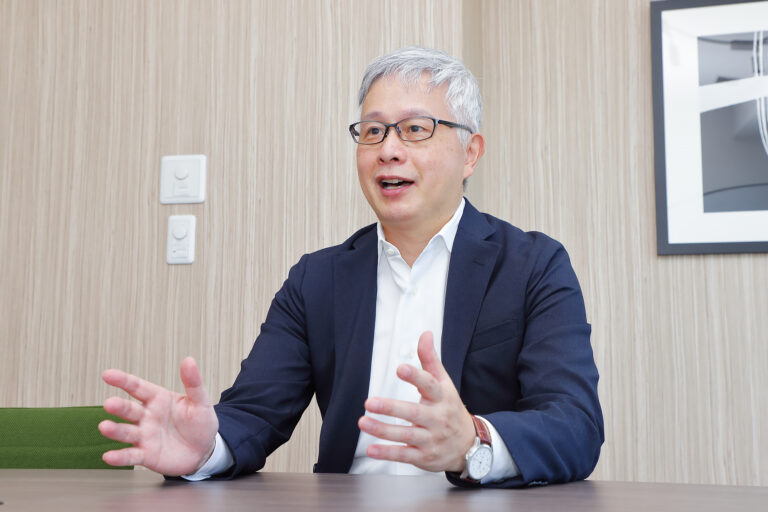
Satoshi Kubo
Engineer · MBA · 20+ years in global automotive engineering and cross-border negotiation
Over more than two decades, Satoshi Kubo has built and bridged engineering programs across Japan, the United States, Europe, and Asia. As BorgWarner's technical lead in Japan, he worked with nearly every major Japanese automaker, taking turbocharger programs from development into mass production while coordinating manufacturing and R&D across multiple countries.
Earlier, at IHI Corporation, a major Japanese heavy-industry manufacturer, he served as technical lead in establishing a manufacturing joint venture from the ground up, and contributed new turbocharger technology to Honda's championship-winning CART racing program.
SPEDi is built on this hands-on, multi-region experience: having sat on every side of the table, representing no single country or interest.
Frequently Asked Questions
- Q1Is Japan-Tech Bridge a trading company or a sales agent?No. Japan-Tech Bridge is not a distributor, trading company, or sales agent. We do not handle product sales or procurement. Our role is to act as a neutral strategic partner, designing the technical, commercial, and negotiation structure required for projects to move forward successfully in Japan.
- Q2Do you provide engineering design or technical development services?We do not perform design or manufacturing ourselves. However, we are deeply involved in how technologies are evaluated and understood in Japanese decision-making processes. Our role is to translate technical strengths into decision-ready information.
- Q3Can we consult you even if we do not yet have a concrete project in Japan?Yes, and in many cases this is the ideal timing. In Japan, early misunderstandings can cause evaluations and negotiations to stall for months or even years. Engaging early helps avoid unnecessary friction.
- Q4Do you work only with overseas companies, or also with Japanese companies?We work with both. Japan-Tech Bridge does not represent any specific country, company, or commercial interest. We operate from a neutral position.
- Q5How are contracts and fees structured?This depends on the scope and nature of the engagement. Possible structures include fixed-fee, phased, or success-linked arrangements. Details are discussed on a case-by-case basis.
- Q6Do you support NDA (Non-Disclosure Agreement) processes?Yes. We regularly work under NDAs for both Japanese and international clients.
Is your negotiation with a Japanese company stuck?
Tell us where things stand. Initial conversations are free of charge.
If you are considering Japan, or wondering why progress feels slower than it should, let's talk.
* We respond to all inquiries within 2 business days.
Or start with the AI analysis →